

Starbucks Outage Impact on Service Businesses: How to Prevent Customer Loss During Communication Failures
Every call that rings out unanswered at a busy shipping counter, print shop, or mailbox center is a customer with a question—a hold time, a rate, a "are you open Saturday?"—who may just call the next store instead. When the phone goes dark, so does the day's sales. An unavailable phone line means lost calls, and lost calls mean lost revenue. Small-center owners can't afford that disruption. This post covers the strategies to prevent customer loss when communication failures strike your operation.
Mid-2024 Starbucks phone system failure cost
In mid-2024, a Starbucks system outage knocked out phone and point-of-sale infrastructure across hundreds of locations, stopping transactions entirely and leaving customers unable to order or reach the stores. The failure cost the chain millions in lost revenue during peak hours and eroded trust among customers who couldn't complete orders or get answers. For service businesses of any size, the lesson is stark: inbound calls are where daily revenue lives. And a single outage can eliminate it entirely. When the phone goes dark, so does the day's sales.
Small-to-mid-sized operators (5–50 employees)
The same cascading failure that crippled Starbucks hits smaller service businesses harder, because there's no redundancy. When the phone system goes down at a ten-person shipping center or print shop, every inbound call—rate inquiries, package tracking, rush orders—goes straight to voicemail or rings unanswered. There's no fallback number, no second line, no remote team standing by.
Outage duration and customer frustration move in lockstep with lost repeat business and one-star reviews. The customer who can't reach you for an hour will call the competitor two blocks over, and the one who waited on hold for ten minutes will remember it the next time they need a mailbox.
Small operators can't afford to lose even a handful of regulars to a preventable communication breakdown.
Why Single-Point Phone Systems Fail
Most small shipping centers, mailbox shops, and print operations run their entire phone system through one carrier and one internet connection. When that connection fails—and it will, whether from an outage, maintenance, or a construction crew cutting the wrong line—every inbound call stops. Customers hear silence, ring indefinitely, or bounce to voicemail. The next operator they call picks up on the first ring. That's the call you lose.
The failure modes are not exotic. ISP outages happen during construction cuts or weather events. Providers schedule maintenance windows that block calls for hours. On-premise hardware—routers, phones, power—fails without warning. A routing misconfiguration at the carrier level can black out an entire region. None of these are rare edge cases; thousands of small businesses experience business phone system outage scenarios every year for hours or days at a time.
The detection delay compounds the damage. Staff inside the business often don't know the line is down until a regular customer walks in and mentions they couldn't get through. By then, dozens of calls may have bounced to competitors. The Starbucks outage revealed this systemic weakness at scale, but the same vulnerability exists wherever a business depends on a single communication channel with no documented backup path.

Dual-Channel Call Handling & Backup Call Handling Systems for Service Businesses
The centers that stay reachable during an outage route calls through two channels at once: an automated backup line (so calls find you when the primary line drops) and a team standing by to handle the complex ones. That way, a routine inquiry—"are you open Saturday?"—gets answered instantly, and your staff stays on the customer in front of them. Three layers work together to maintain reachability:
- Automatic backup carrier routing
- Answering service contracts
- Mobile hotspot routing protocols
Automatic backup carrier routing means when your main phone line goes down—whether the internet drops, the power fails, or the phone system itself hiccups—a backup carrier kicks in automatically and routes calls to a secondary number without interrupting your customers. If your primary provider has scheduled maintenance or a weather event knocks out your ISP, the switchover happens silently; your customers reach you on a backup line, and you don't miss a call. Configuration takes an afternoon, and many business phone platforms offer dual-carrier routing as a built-in feature.
Answering service contracts are your safety net when everything else fails—the internet, the power, the phone hardware. When that happens, inbound calls forward to a live person who answers on your behalf, takes a message, and lets you know immediately if it's urgent. Not every call needs that level of backup, but when the office is truly dark, it's the difference between losing a customer and keeping them.
Mobile hotspot and cellular routing protocols keep a skeleton phone system running on cellular data if broadband fails. A smartphone or dedicated hotspot device maintains connectivity for essential call handling, letting staff triage inbound calls from a backup device until the primary system recovers.
Implementation cost ranges from $100–500 per month depending on scale and backup service tier. A hybrid model—automated backup plus human backup—delivers the resilience service businesses need to retain customers during primary system failure.
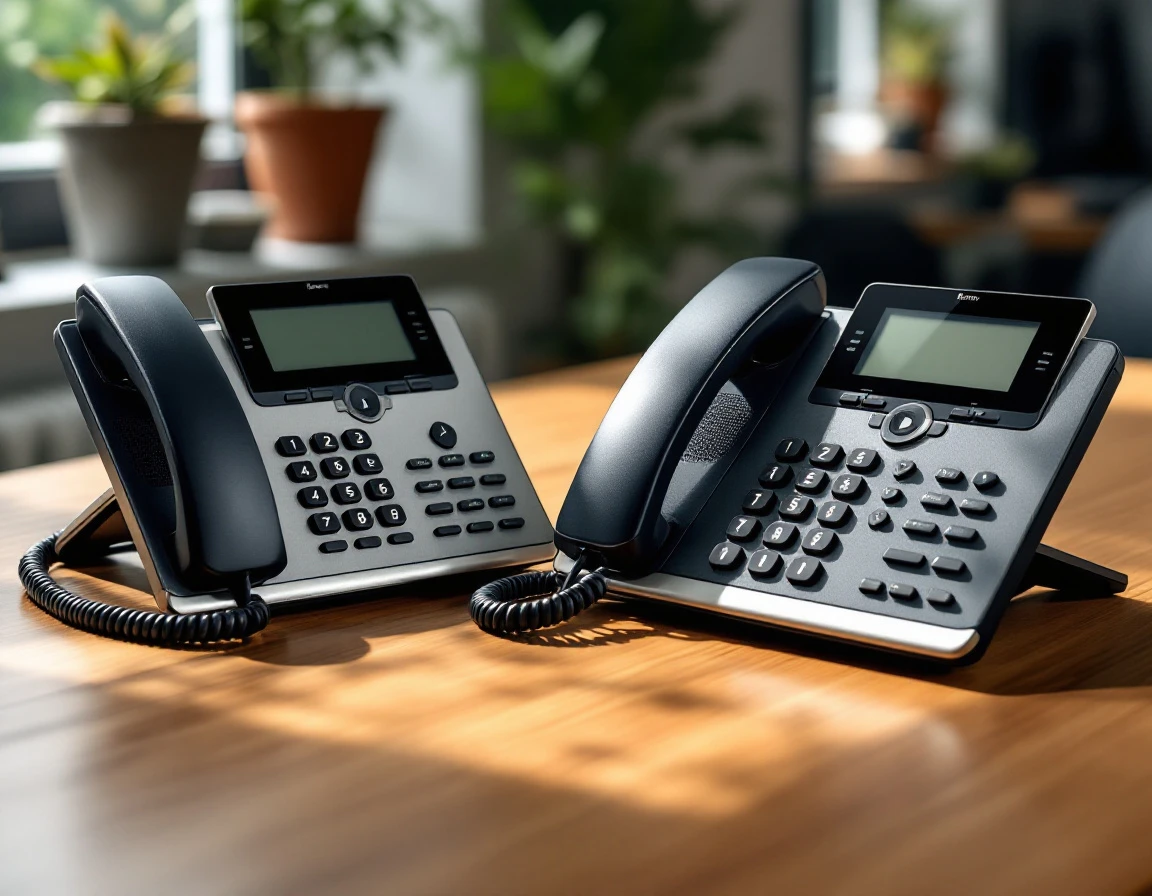
Response Protocol & What to Do When Phone System Fails
A backup phone system only works if your team knows how to activate it. When calls stop flowing, every minute of confusion costs revenue—so you need a documented response protocol that moves from detection to resolution without guesswork.
Your protocol should cover four stages:
- Detection and escalation — who checks call flow, how quickly they report failures
- Activation of backup channels — switching to secondary carrier, alerting the answering service, routing staff to mobile hotspots
- Customer communication — updating voicemail, website, social media, and SMS channels with a clear outage message
- Staff briefing — everyone knows which numbers to answer, how to route customers, and where to escalate problems
Pre-written outage messages prevent the panic that turns a technical hiccup into a trust problem.A template like "We're experiencing a temporary phone issue and have activated backup lines. Call us at [backup number] or visit [website]—we're here and ready to help" shows competence and keeps customers from assuming you've closed or abandoned them.
Train staff on backup procedures during slow hours, then log every incident and review what worked. That outage log becomes your playbook for faster recovery next time.
ROI & Cost-Benefit Analysis for Summer 2026
The financial case for redundancy becomes clear once you calculate what a typical outage costs your business. An HVAC contractor who misses calls during a system failure loses immediate revenue that day—not to mention the customer who calls the competitor next time. A plumbing business that can't take emergency calls during peak season doesn't just lose that call; it trains repeat customers to dial someone else. Compare that to a backup system that costs far less per month than the revenue lost in even one prevented outage—paying for itself many times over through protection alone.
Peak season—July and August—is when inbound calls do the heavy lifting. An hour of downtime during those weeks means missed rate inquiries, delayed package tracking requests, and customers who can't book a service slot. The center that answers those calls—even if the primary line hiccups—keeps the revenue and the repeat business. A communication failure customer retention strategy based on backup systems prevents this loss: the ROI multiplier stacks quickly with prevented revenue loss, retained customer relationships, and eliminated staff overtime spent manually returning missed calls. For a small service business, that's the difference between a preventable crisis and a protected summer season.
Next Steps: Build Your Continuity Plan Now
The July 2026 peak season is twelve months away — enough time to audit, implement, and test a backup solution that keeps customers reaching you when a primary line fails. Start by thinking through your peak weeks: July and August, when inbound calls are highest and an outage costs the most. If your current phone system goes down during those weeks, how many calls disappear? How quickly do you know the line is out? That's where a platform like PortPuffin steps in—it logs every call, routes them automatically when your primary line fails, and keeps your small center reachable 24/7.
Next, select your backup solution. Automated backup carrier routing suits businesses with technical staff and budget flexibility; answering service contracts work when you need a human voice during outages; hybrid approaches—automated backup plus an on-call service—balance cost and coverage. Match the solution to your peak-season risk and monthly budget, knowing that one prevented outage pays for twelve months of protection.
Document your response protocol now, before the crisis. Write the outage message customers will hear, create forwarding instructions for staff, and schedule a walk-through so everyone knows their role. Then test the backup in a scheduled simulation—disconnect your primary line for an hour, route calls through the backup, and verify customers reach help as designed.
Explore how PortPuffin's AI receptionist handles routine calls and routes complex ones to staff, with built-in backup so you stay reachable even when your primary line is down. That's how small centers sound and respond like much larger ones. See how PortPuffin answers every call, even when your primary system is down, so peak season stays profitable.